
Platform
The complete clinical platform for avatar therapy
Heka VR provides psychiatric services with everything needed to implement avatar therapy as a clinical offering: CE-marked medical software, validated hardware, comprehensive clinician training and certification, ongoing supervision, and continuous platform development informed by the global research community.
Clinical mechanism
A relational intervention, delivered in immersive virtual reality
Avatar therapy targets a mechanism shared across several severe mental illnesses: the subordinate relationship patients develop with an intrusive thought or internal voice. In schizophrenia, this voice is experienced as auditory hallucination. In eating disorders, as the "eating disorder voice." In OCD, as the intrusive demand of the obsession. In each case, the patient occupies a powerless position relative to the voice - and this power imbalance maintains the illness.
Avatar therapy gives the voice form. Working with their clinician, the patient creates a digital avatar — visual and auditory — that embodies their controlling thoughts or most distressing inner voice. The patient then engages the avatar in structured, real-time dialogue while the clinician facilitates the interaction, voicing the avatar through a real-time voice modulator and shifting fluidly between the avatar's voice and their own supportive therapist voice.
Across a typical course of seven sessions, the avatar's power gradually concedes. The patient's authority grows. What was an internal, overwhelming presence becomes an external entity the patient can confront, challenge, and ultimately overcome.
Why VR
Why immersive virtual reality
Stronger therapeutic presence
Clinical research has shown that immersive 3D virtual reality substantially enhances the patient's sense of presence with the avatar — a factor directly associated with stronger therapeutic outcomes. Patients experience the avatar as genuinely present in the same physical space, which deepens the emotional impact of the dialogue and supports more meaningful relational work. Immersion also gives the clinician precise control over the therapeutic environment: the proximity of the avatar can be graded for exposure, settings can be tailored to where the patient typically experiences their voice, and supportive tools such as on-screen prompts can be introduced where helpful.
One room, not two
Because the patient wears a VR headset, the clinician and patient can remain in the same room throughout the session, with the clinician controlling the avatar from a laptop beside the patient. This setup holds substantial benefits compared to two-room setups, saving scarce clinical resources and improving patient experience.
For the patient, the continuous physical presence of a trusted clinician throughout an emotionally demanding session creates safety and supports trust — particularly important in the early sessions.
For the service, delivering therapy requires only one clinical room and one clinician, rather than two rooms and the operational coordination of running them in parallel.
Inside the clinician software
Configure, control and adapt every session from a single screen
The clinician software is the operational core of the platform. From one laptop beside the patient, the clinician shapes the avatar, controls the immersive environment, and shifts in real time between voicing the avatar and voicing the therapist — all without breaking the therapeutic flow.
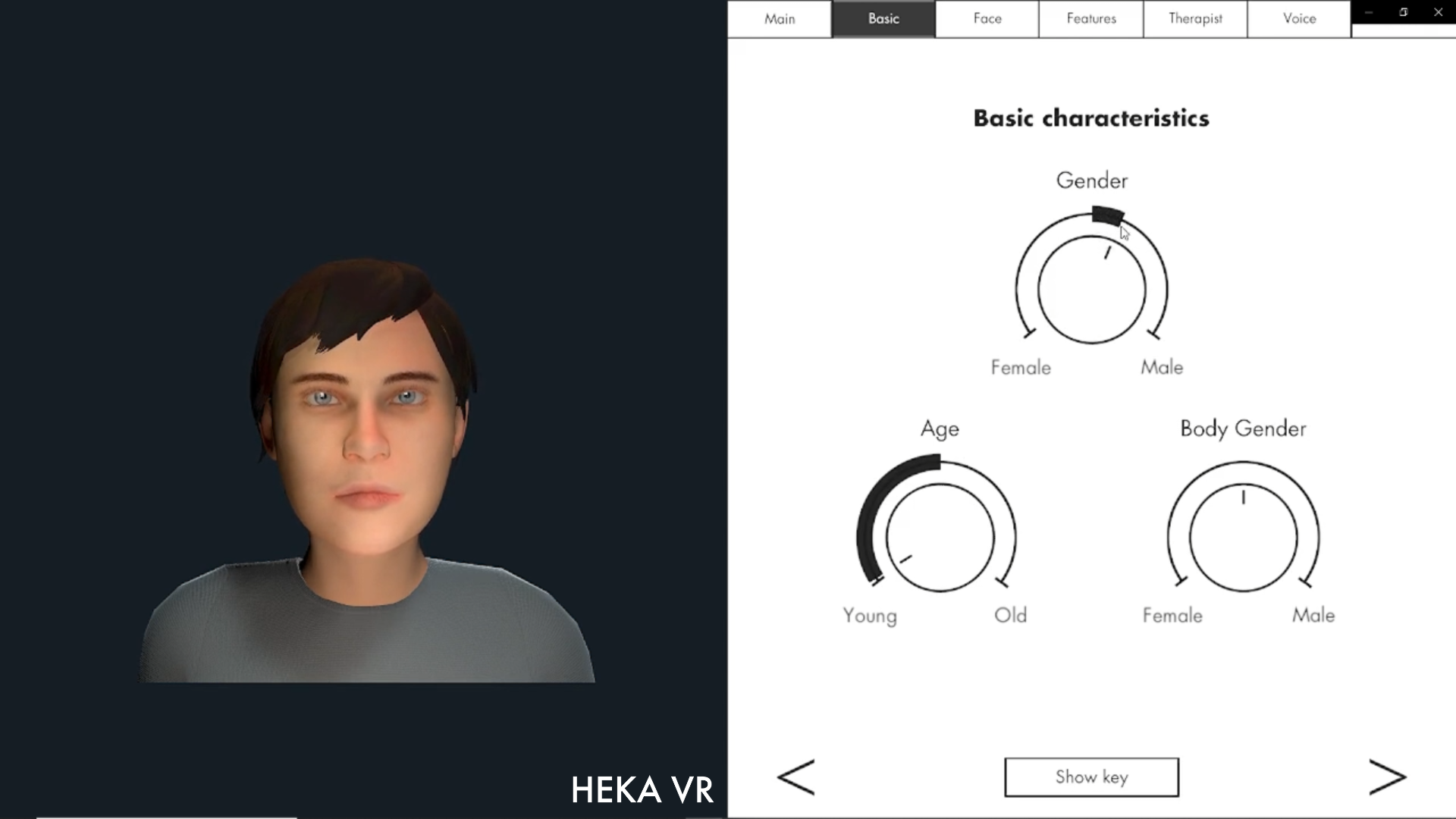
Build the avatar with the patient, in minutes.
Gender, age, facial features and expression are shaped through tactile dial controls. The clinician and patient iterate side-by-side until the avatar resembles the voice as the patient experiences it — the foundation of the therapeutic encounter.
Direct the encounter without breaking the moment.
Grade the avatar's distance for exposure, switch the environment from a neutral void to a familiar room, and route voice between avatar and therapist with a single press. Volume, presence and proximity are titratable throughout the session.
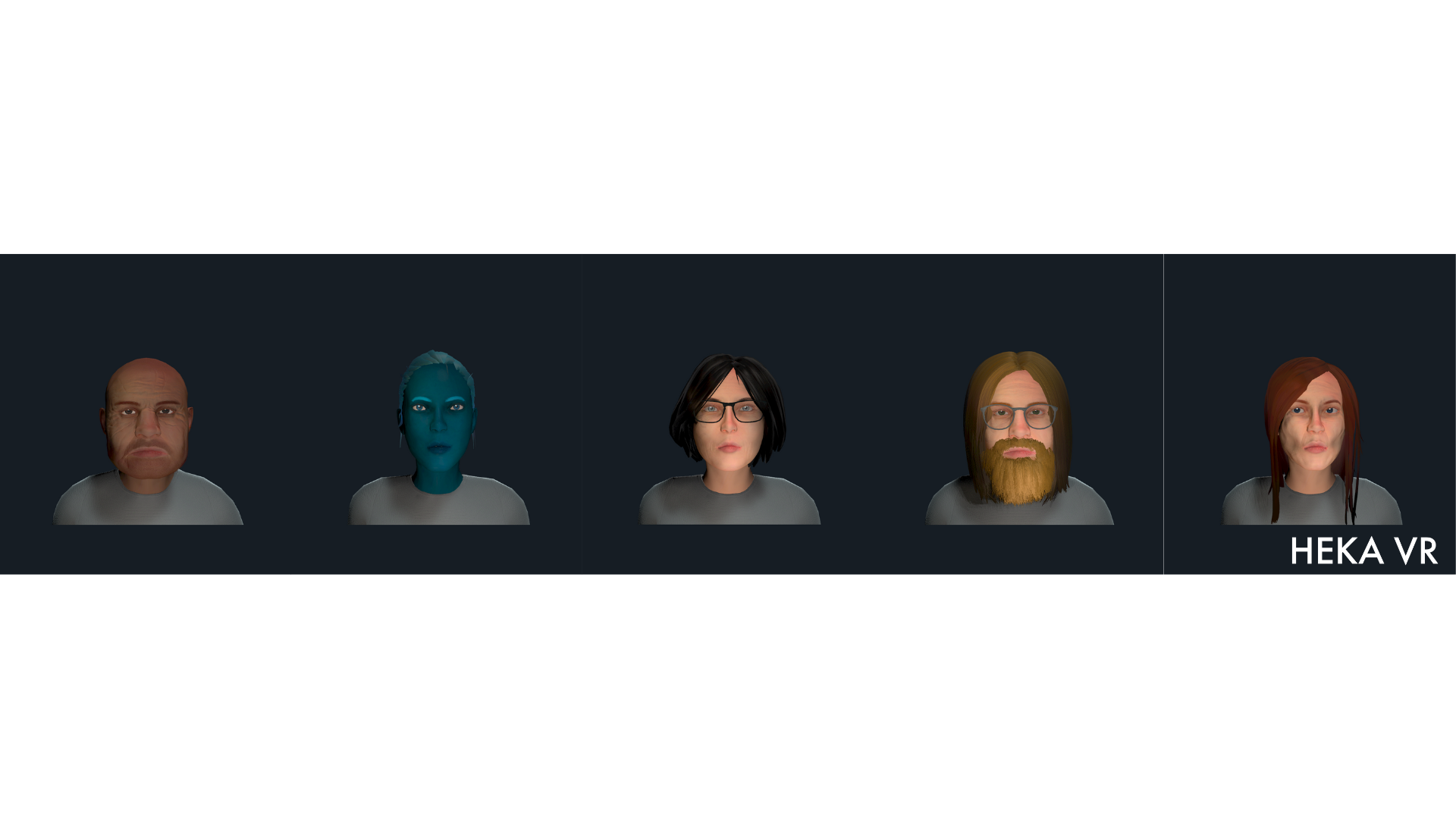
From the literal to the symbolic.
The system supports a wide range of avatar representations — from realistic human likenesses to deliberately non-human or symbolic forms — so the avatar can match the patient's lived experience of the voice, whether they perceive it as a specific person, a stranger, or something other than human.
Included
What's included
Medical software
CE-marked Class I MDR. Continuously developed in collaboration with leading clinical researchers. Updates and improvements delivered as part of your subscription.
Validated hardware
We provide and support the VR headsets and peripherals required to deliver therapy safely and consistently. No procurement complexity for your IT department.
Clinical training & certification
A structured training programme for the psychiatric professionals on your team, combining technical training, clinical training in the avatar therapy method, and supervised practice leading to certification.
Ongoing clinical supervision
Certified clinicians receive continued supervision from our network of senior clinical specialists, ensuring fidelity to the method and supporting complex cases.
Technical support
Direct support for clinicians and IT, with response times appropriate to clinical operations.
Indications
Where avatar therapy applies
Schizophrenia spectrum disorders
Primary focus on persistent auditory verbal hallucinations. Clinical evidence supports use in treatment-resistant cases.
Further indications
Eating disorders, obsessive-compulsive disorder, depression, borderline personality disorder, and other psychiatric conditions where externalising intrusive thoughts may be clinically meaningful.
Training
Certified courses in avatar therapy for auditory hallucinations
Beyond software provision, Heka VR offers full clinical certification courses in avatar therapy for auditory hallucinations in schizophrenia. The course combines technical training on the platform, clinical training in the therapeutic method, and structured supervised practice. Certification is required to deliver avatar therapy using Heka VR's platform and ensures fidelity to the validated treatment protocol.
Regulatory
Built to medical device standards
Heka VR is CE marked as a Class I medical device under the EU Medical Device Regulation (MDR). Our quality management system, clinical risk management and post-market surveillance processes follow the standards expected of clinical software in the European market.
Ready to implement avatar therapy in your service?
The most efficient next step is a conversation. We'll understand your service context, walk you through the platform, and outline what implementation would look like for your team.